

Think about the last time you bought a piece of clothing. Maybe it was a $12 top that caught your eye while scrolling, or a trendy jacket that arrived two days after you ordered it. Chances are you weren’t thinking about who made it, what it was made from, or how long it would last. You were thinking about how good it looked and how little it cost.
That impulse, multiplied by billions of shoppers, is the engine of fast fashion. It has changed what we wear, how often we buy, and how much we throw away. It has also created some of the most debated environmental and labor problems of our time.
This guide explains what fast fashion is, where it came from, how it works, why it is so popular, what it costs, and what you can do about it. Whether you are a student researching the topic, a shopper trying to make better choices, or someone thinking about starting a clothing brand, you will find clear answers here.
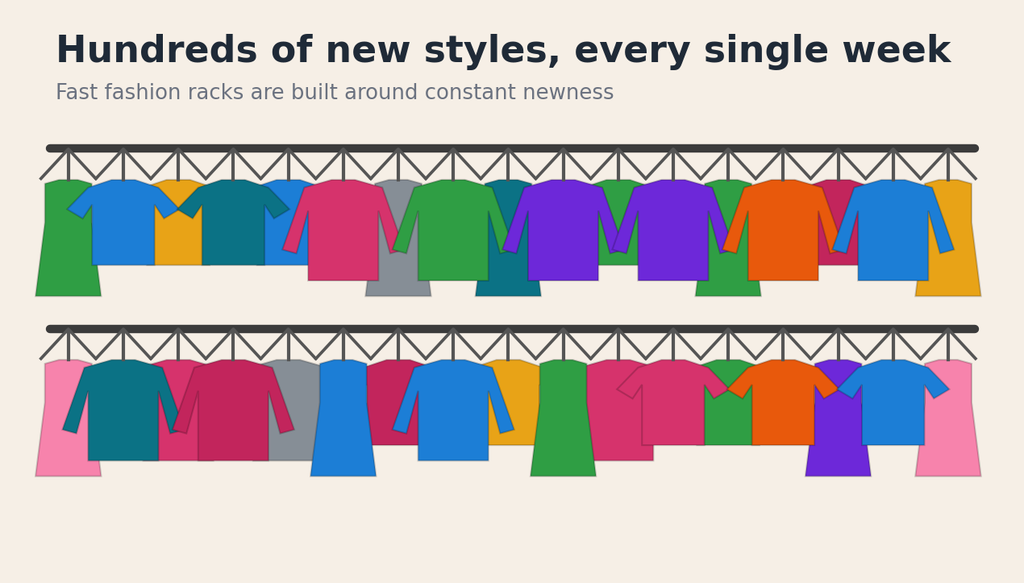
Crowded racks of new clothing in a fast fashion store
What Is Fast Fashion? (Definition)
Fast fashion is a business model that quickly turns the latest runway and social media trends into cheap, mass-produced clothing, then sells it in large volumes to consumers.
Instead of two or four seasons a year, fast fashion brands release new styles every week, sometimes every day. Clothes are made quickly, with low-cost materials and low-cost labor, so that prices stay low enough to encourage frequent, often impulsive purchases.
Three ideas sit at the heart of the definition:
- Speed: Designs move from idea to store shelf or website in a matter of weeks, or even days.
- Low cost: Cheap fabrics, high-volume production, and low labor costs keep prices down.
- Disposability: Garments are designed for short-term trends rather than long-term wear, so they are often worn only a handful of times before being discarded.
A helpful way to think about it: traditional fashion sells you clothes for the season, while fast fashion sells you clothes for the moment.
A Short History of Fast Fashion
To understand fast fashion, it helps to see how clothing was made and sold before it existed.
Before fast fashion: slow, seasonal, and expensive
For most of history, clothing was valuable. People repaired, altered, and passed garments down. Even after the Industrial Revolution made fabric cheaper, fashion still ran on a slow cycle. Designers showed collections months before they reached stores, and retailers planned their stock far in advance. Typically there were two main seasons, spring/summer and autumn/winter, and trends trickled down from high fashion to ordinary shops over a long period.
The rise of ready-to-wear
In the 20th century, ready-to-wear clothing replaced much of what had been made-to-measure. Mass production, standard sizes, and department stores made clothes affordable to far more people. In the 1960s and 1970s, youth culture and high street brands accelerated trend cycles further. But production was still planned months ahead, and most of it was manufactured in Western countries.
Globalization changes everything
From the 1980s and 1990s onward, brands began moving manufacturing to countries with lower labor costs, especially in Asia. Trade agreements and falling shipping costs made it possible to produce garments cheaply overseas and ship them worldwide. This is the foundation fast fashion was built on.
Zara and the birth of the term
The term “fast fashion” is commonly traced to the late 1980s and early 1990s, when Zara, owned by the Spanish company Inditex, became known for getting new designs into stores in a matter of weeks rather than months. The press described this approach as fast fashion. Other retailers, including H&M, Topshop and Forever 21, adopted similar strategies and expanded around the world.
The social media era and ultra-fast fashion
In the 2010s, Instagram, YouTube and later TikTok changed everything. Trends could go viral overnight, and shoppers wanted the look immediately. Online-only brands such as Boohoo, Fashion Nova and later Shein used data and social media to launch enormous numbers of styles in tiny batches, pushing the model further into what many now call ultra-fast fashion.
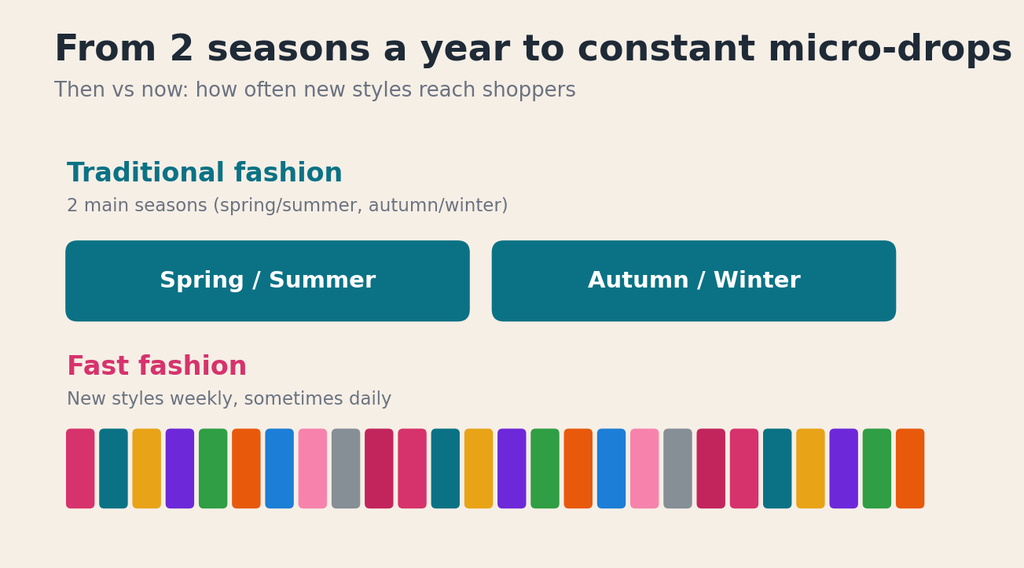
From two seasons a year to constant micro-drops
How Does Fast Fashion Work?
Fast fashion looks simple from the outside: you see something, you click, it arrives. Behind the scenes, it is a tightly tuned supply chain built around speed and flexibility.
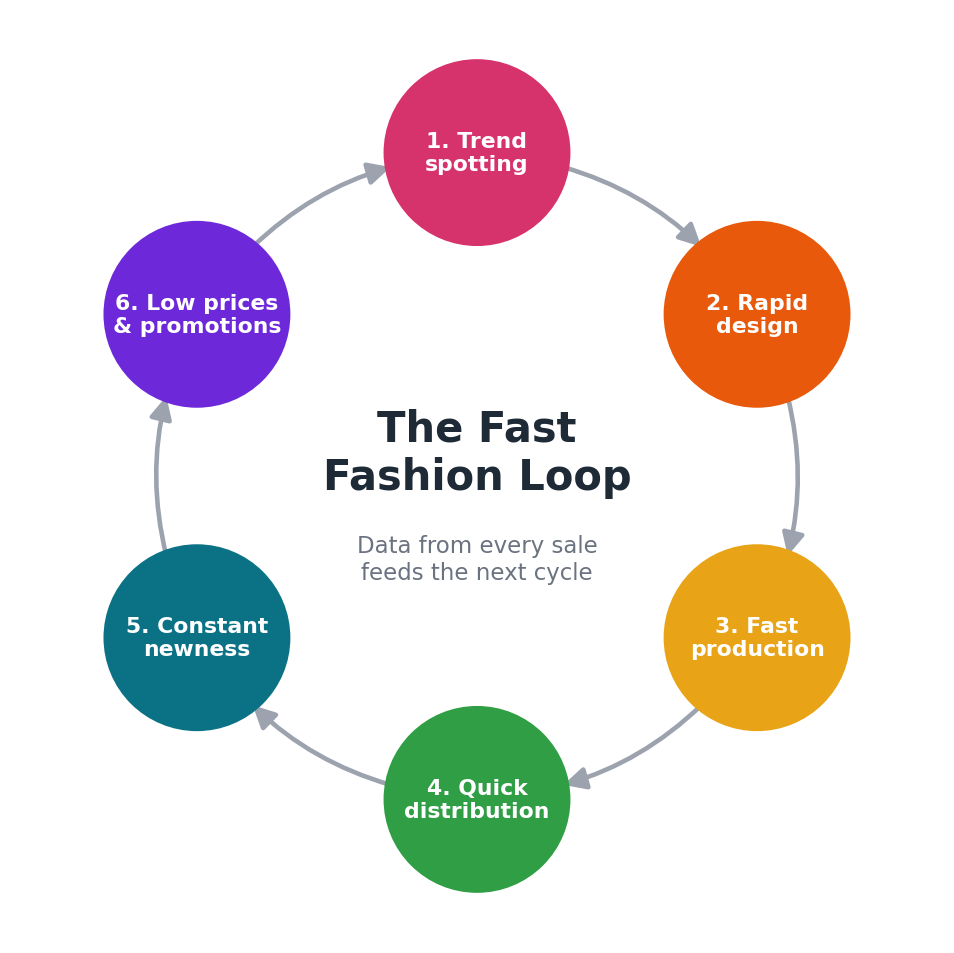
The fast fashion loop: six steps that repeat faster each time.
1. Trend spotting
Brands watch runway shows, celebrity outfits, street style, and, increasingly, social media and search data. Rather than inventing trends, fast fashion brands are very good at noticing what is already gaining attention and reacting to it.
2. Rapid design
Design teams adapt trending looks into simplified, affordable versions. Because they are not creating high-concept collections, the design stage can take days instead of months.
3. Fast, flexible production
Factories, often in countries such as China, Bangladesh, Vietnam, Turkey, India, and Cambodia, produce garments quickly. Some brands keep part of their production closer to home so they can respond faster to demand. Many use small test batches: if an item sells, they reorder it; if not, they move on.
4. Quick distribution
Efficient logistics, such as air freight and automated warehouses, get clothes to stores and customers rapidly. This speed is a big part of the appeal.
5. Constant newness
New products appear continuously. Shoppers learn that if they like something, they should buy it now, because it may be gone next week. This creates urgency and drives repeat visits.
6. Low prices and promotions
Cheap base prices, frequent sales, and discount codes make purchases feel like small, harmless decisions. Buying several items at once starts to feel normal.
Together, these steps form a loop: trends appear, products are made, shoppers buy, data flows back to the brand, and the cycle repeats faster each time.
Key Characteristics of Fast Fashion
How can you tell whether a brand or product is fast fashion? Most of these features show up together:
- Very frequent new arrivals, sometimes thousands of new items a month, or even in a single day for the largest online players.
- Low prices that are difficult to explain without cheap materials and low labor costs.
- Trend-driven designs that copy or closely follow current styles.
- Synthetic fabrics such as polyester, nylon, and acrylic, which are cheap and quick to produce.
- Limited transparency about factories, wages, materials, and environmental practices.
- Short product life, both in terms of fashion relevance and physical durability.
- Heavy marketing, including influencers, paid ads, flash sales, and countdown timers.
No single trait makes a brand fast fashion, but the more of these boxes it ticks, the more likely it is to operate this way.
Why Is Fast Fashion So Popular?
It is easy to criticize fast fashion, but it is more useful to understand why it succeeds. The reasons are genuine.
Affordability. For people on tight budgets, fast fashion offers access to clothing they might not otherwise afford. This is an important point, and one that is sometimes missing from criticism of the industry. Not everyone can pay more for ethical or high-quality alternatives.
Variety. Shoppers can change their look as often as they like without spending much.
Social media culture. Platforms reward fresh content. When people feel pressure to post new outfits, “haul” videos and “outfit of the day” posts push them to buy more.
Convenience. Easy returns, quick shipping, and mobile shopping make buying painless.
Trend access. A style that appears on a runway or a celebrity can be in your hands within weeks, at a fraction of the original price.
Psychology. Small, frequent purchases give a quick burst of excitement. Limited-time offers and low-stock warnings trigger fear of missing out, nudging us to act before we think.
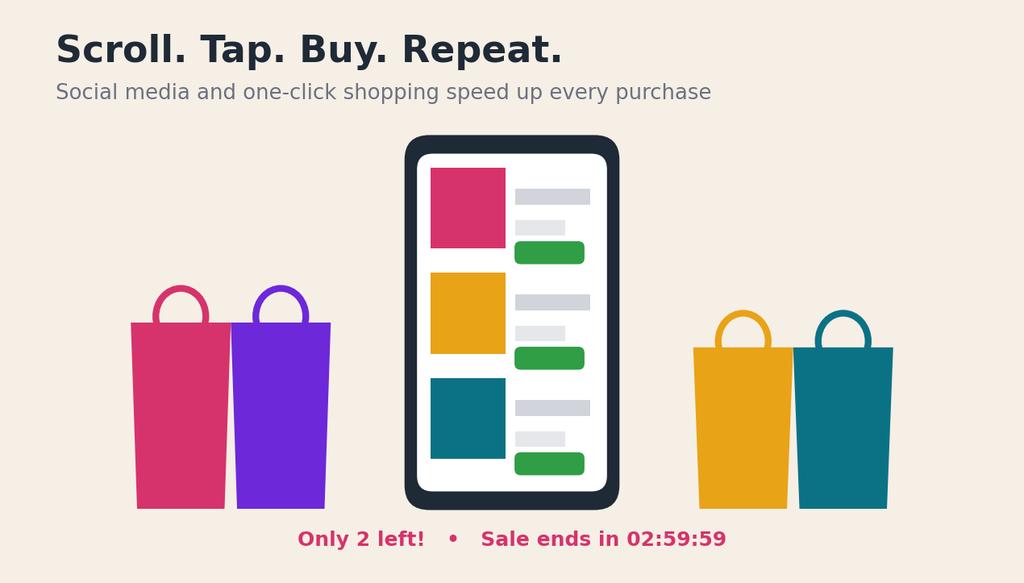
Shopper browsing trends on a smartphone
The Environmental Impact of Fast Fashion
Environmental concerns are the most widely discussed problem with fast fashion. The scale of the clothing industry is enormous, and fast fashion’s emphasis on volume magnifies its footprint. Figures vary by source and methodology, so treat the numbers below as indicators of scale rather than exact measurements.
Carbon emissions
The fashion industry is often estimated to account for a few percent of global greenhouse gas emissions, with some widely quoted figures going higher. Estimates differ, but there is broad agreement that producing, transporting, and disposing of clothing generates significant emissions. Synthetic fibers like polyester are made from fossil fuels, and energy-intensive manufacturing, often powered by coal in producing countries, adds to the total.
Water use and pollution
Textile production uses large amounts of water. A commonly cited figure from the World Wildlife Fund is that making a single cotton T-shirt can require roughly 2,700 liters of water, about what one person might drink over several years. Dyeing and finishing also release chemicals into rivers in some manufacturing regions, harming ecosystems and local communities when wastewater is not properly treated.
Textile waste
Because fast fashion encourages buying more and keeping clothes for less time, waste piles up. The Ellen MacArthur Foundation has estimated that the equivalent of a garbage truck of textiles is landfilled or burned every second worldwide. In the United States, the Environmental Protection Agency has reported that millions of tons of textile waste end up in landfills each year.
Donating does not always solve the problem. Charities receive more clothing than they can sell, and large quantities are baled up and exported to other countries, where they can overwhelm local markets and end up as waste. Some regions, such as parts of West Africa and Chile’s Atacama Desert, have become well-known examples of this.
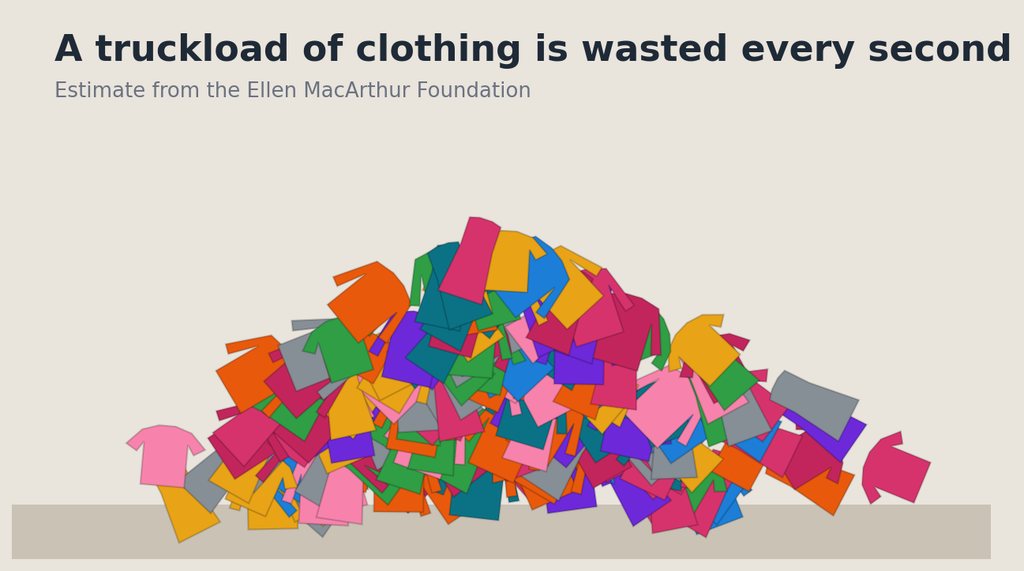
Pile of discarded clothing and textile waste
Microplastics
Synthetic garments shed tiny plastic fibers every time they are washed. These microfibers pass through wastewater systems and end up in rivers and oceans, where they can be eaten by marine life and enter the food chain. Research suggests that laundering synthetic clothing is one of the major sources of microplastic pollution in the oceans.
Low recycling rates
Most clothing is not recycled into new clothing. The Ellen MacArthur Foundation has reported that less than 1% of the material used to produce clothing is recycled into new clothing. Mixed fibers, such as cotton-polyester blends, are especially hard to separate and recycle, and fast fashion uses a great many of them.
Overproduction
Brands often produce more than they can sell. Unsold stock may be discounted heavily, sent to outlets, or in some cases destroyed. Even clothes that sell may be worn only a few times. The Ellen MacArthur Foundation has estimated that the number of times a garment is worn has fallen sharply in recent decades while production has roughly doubled.
The Human and Social Cost
Fast fashion’s low prices are made possible, in part, by labor conditions that often fall far short of what people in wealthy countries would accept.
Low wages
Garment workers, most of them women, are frequently paid wages that barely cover basic living costs. In many producing countries, the legal minimum wage is below what researchers and unions consider a living wage. Pressure from brands to cut prices and deliver quickly pushes factories to keep costs as low as possible.
Unsafe conditions
The best-known example of the human cost is the Rana Plaza collapse in Bangladesh on April 24, 2013. A building housing several garment factories fell, killing more than 1,100 workers and injuring thousands more. The disaster exposed how unsafe conditions could be in the factories supplying global brands and led to the Bangladesh Accord on Fire and Building Safety, an agreement between brands and unions to improve inspections and safety standards. Progress has been made, but problems persist across the industry.
Long hours and pressure
Tight deadlines and rapid turnaround demands can result in forced overtime, unpaid hours, and poor working conditions. Workers may have limited power to push back, especially where union organizing is restricted.
Child labor and forced labor concerns.
Reports from human rights organizations and investigative journalists have linked parts of the global garment and cotton supply chains to child labor and forced labor. Because supply chains are long and complex, with multiple layers of subcontracting, it can be very difficult for brands, let alone shoppers, to know exactly where garments are made.
Impact on local communities
In regions where textile production is concentrated, pollution from factories can affect drinking water, farming, and health. The communities most affected are often those with the least ability to demand change.
It is fair to note that garment manufacturing also provides jobs and income, and in countries like Bangladesh, Cambodia, and Pakistan, the textile sector is a critical part of the economy. The issue is less about whether these jobs exist and more about whether they are safe, fairly paid, and sustainable.
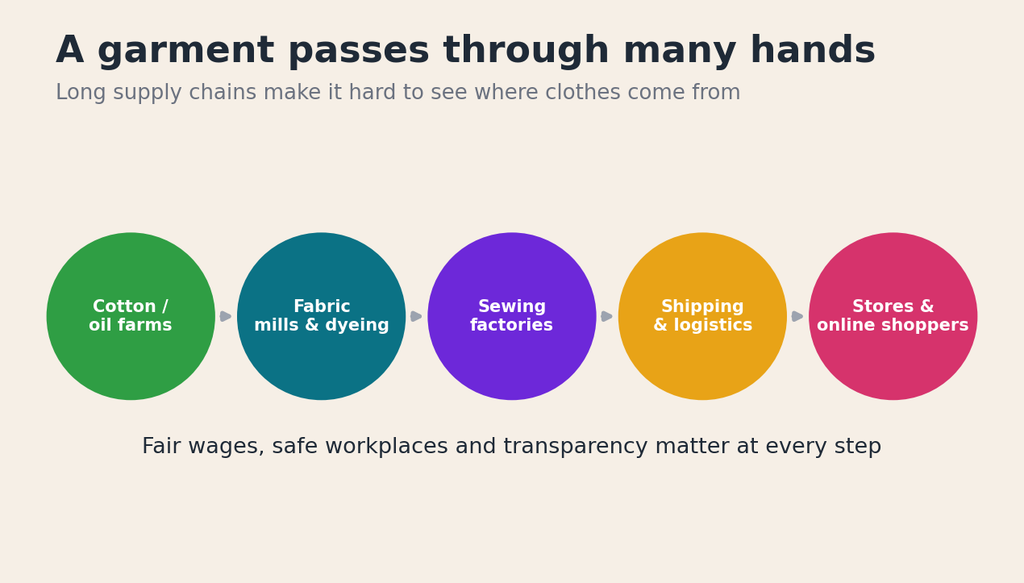
A garment passes through many hands in a long supply chain
Ultra-Fast Fashion: The Next Level
In recent years, a new term has entered the conversation: ultra-fast fashion. It describes brands that take the fast fashion model even further, using real-time data, artificial intelligence, and tiny production runs to list thousands of new styles at astonishingly low prices.
Companies such as Shein, Temu’s apparel section, Cider, and others operate primarily online, shipping directly to customers. Their approach typically involves:
- Testing small batches of a design, then scaling up what sells.
- Releasing new products at a pace that far exceeds traditional fast fashion retailers.
- Relying on social media influencers and viral content for marketing.
- Shipping small parcels directly from overseas, which has historically been helped by customs rules for low-value packages. Those rules have been changing in the United States and other regions, so it is worth checking current regulations.
Because the volumes are so large and the prices so low, ultra-fast fashion has drawn extra scrutiny from regulators, journalists and researchers over product safety, labor practices, copyright issues and environmental impact. Brands in this category have generally disputed or responded to many of these criticisms, and the details differ by company, so it is best to rely on documented, up-to-date reporting when evaluating any specific brand.
Fast Fashion vs. Slow Fashion
Slow fashion is often presented as the opposite of fast fashion. It is an approach that prioritizes quality, durability, ethical production, and mindful consumption.
| Feature | Fast Fashion | Slow Fashion |
|---|---|---|
| Production speed | Weeks or days | Months, often seasonal or limited |
| Price | Very low | Higher |
| Quality | Often low to moderate | Typically higher |
| Materials | Often synthetic or low-cost blends | Natural, recycled, or responsibly sourced |
| Volume | Very high | Small batches |
| Trend focus | Short-lived trends | Timeless, durable styles |
| Transparency | Often limited | Usually greater |
| Consumer mindset | Buy often, wear briefly | Buy less, wear longer |
| Typical lifespan | Short | Long |
Slow fashion is not perfect or accessible to everyone, since the higher prices can be out of reach for many people. But the underlying idea, buying fewer, better things and keeping them longer, can be applied at any budget.
Examples of Fast Fashion Brands
Fast fashion exists on a spectrum, and brands differ in their practices, transparency, and responses to criticism. Commonly cited examples include:
- Zara (Inditex), known for its quick turnaround from design to store.
- H&M, a global high street giant that has launched sustainability initiatives but continues to produce at high volume.
- Forever 21, a US-based brand that expanded rapidly and later filed for bankruptcy.
- Boohoo and its group brands, a UK online retailer.
- Fashion Nova, a US online brand built heavily on influencer marketing.
- Shein, an online-only retailer often described as ultra-fast fashion.
- Cider, an online brand popular with younger shoppers.
- Primark, a budget retailer known for very low prices.
Being on this list does not mean every product or practice at these companies is identical. If you want to judge a specific brand, look at independent sources such as sustainability rating platforms, investigative reports, and the company’s own published supplier information.
How to Spot Fast Fashion
You do not need a rating tool to recognize fast fashion. These quick checks can help.
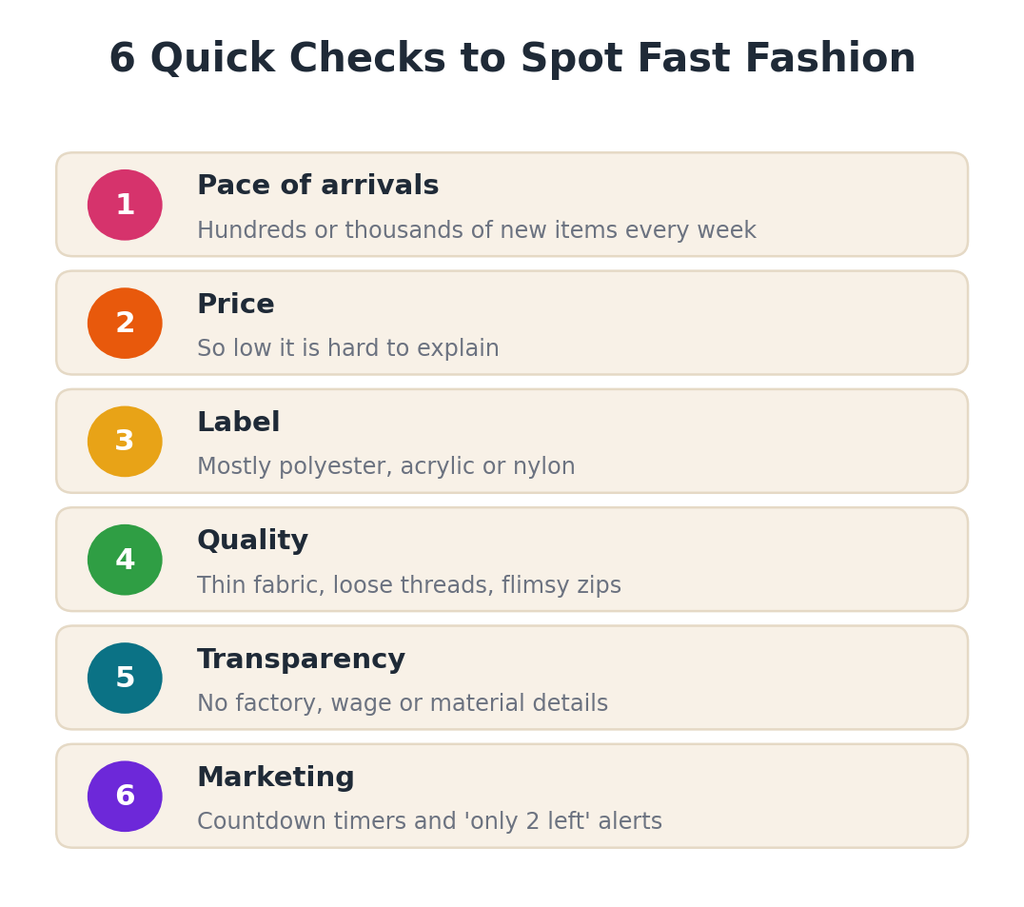
Six quick checks to spot fast fashion.
- Check the pace of new arrivals. If a site adds large numbers of new products every day or week, it is likely fast fashion.
- Look at the price. A dress, jacket, or pair of jeans priced extremely low often means corners were cut somewhere in materials, labor,r or both.
- Read the label. A garment made mostly of polyester, acrylic, or nylon, especially with unclear blends, points to low-cost mass production.
- Feel the quality. Thin fabric, loose threads, uneven stitching, and flimsy zippers are red flags.
- Look for transparency. Does the brand tell you where items are made, who made them, and what they are paid? Vague statements like “conscious” or “eco” with no supporting details deserve skepticism.
- Notice the marketing. Countdown timers, “only 2 left” alerts, and constant discount codes are designed to speed up your decisions.
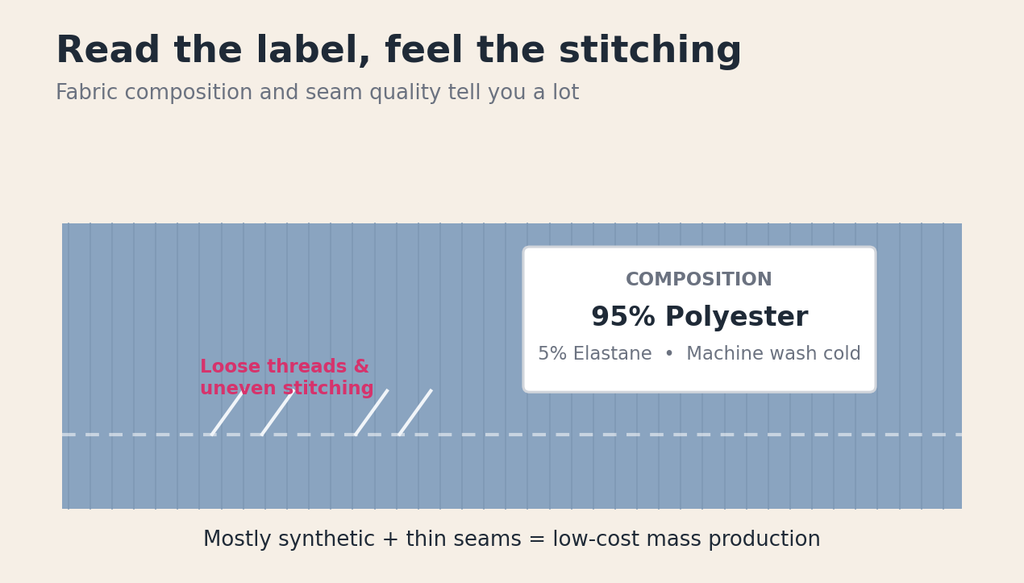
Clothing label and stitching quality check
How to Shop Smarter: Practical Alternatives to Fast Fashion
The most sustainable garment is, in many cases, the one you already own. You do not have to overhaul your life or never buy anything new. Small, steady changes add up.
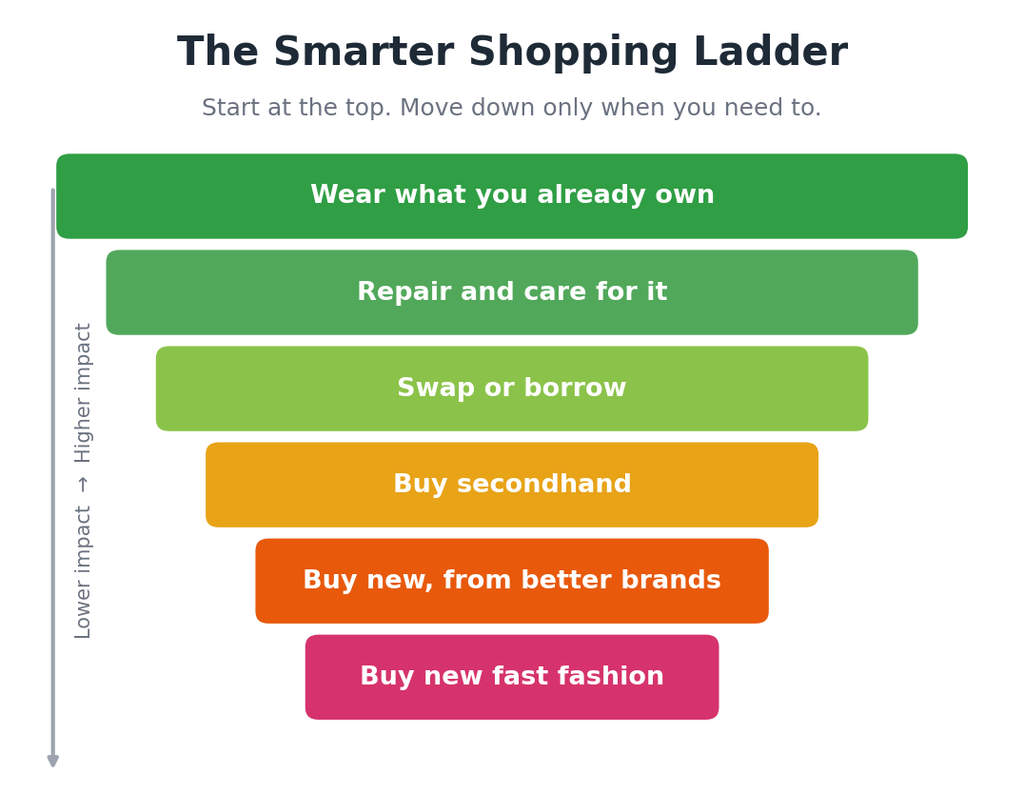
The smarter shopping ladder: start at the top and move down only when needed.
1. Buy less, choose well
Before buying, ask yourself: Will I wear this at least 30 times? Do I already own something similar? Does it go with at least three other items in my wardrobe? This simple “30 wears” test can prevent a lot of impulse purchases.
2. Shop secondhand
Thrift stores, consignment shops, and online resale platforms give existing clothes a second life, usually at a lower price. This is one of the most budget-friendly ways to step away from fast fashion.
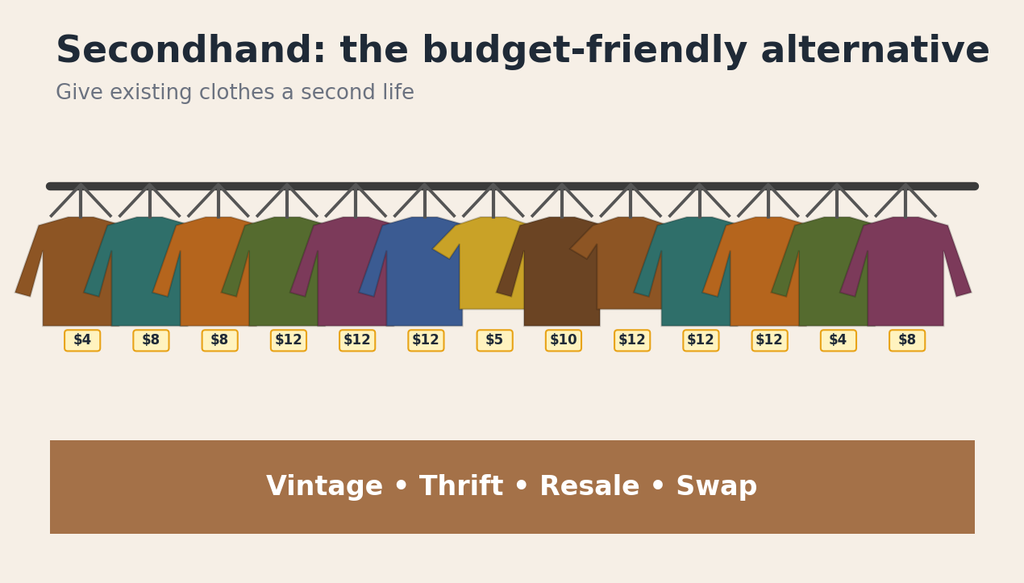
Secondhand clothing rack with price tags
3. Swap and borrow
Clothing swaps with friends, family, or community groups are free and fun. For special occasions, renting an outfit can be cheaper and more sustainable than buying something you will wear once.
4. Build a capsule wardrobe
A capsule wardrobe is a small collection of versatile, mix-and-match pieces in a coordinated color palette. It reduces decision fatigue and makes it easier to justify spending a little more on each item.
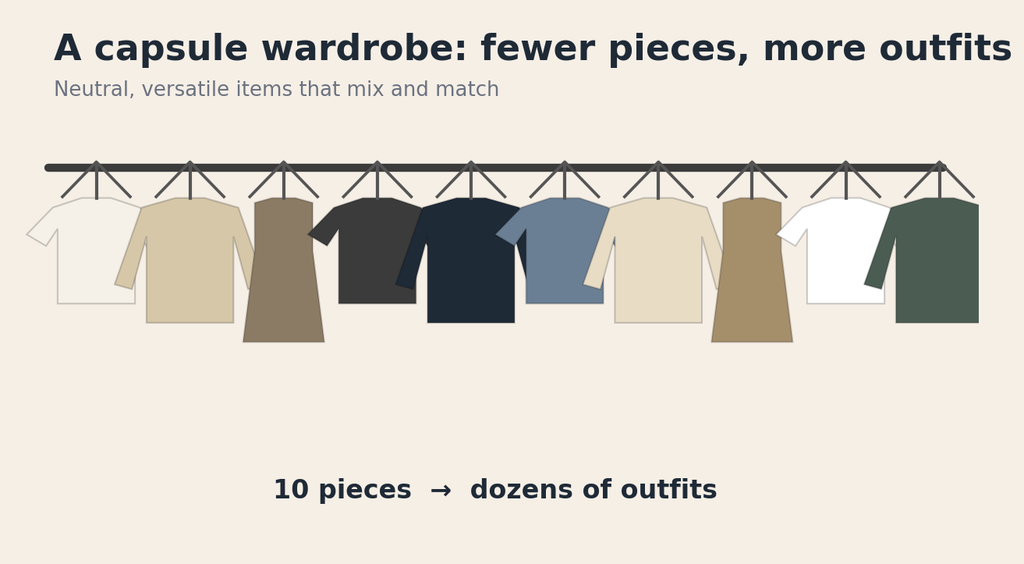
Capsule wardrobe of neutral, versatile clothing
5. Look at fabrics and care labels
Natural and well-made fibers such as cotton, linen, wool, and hemp generally last longer and break down more easily than synthetics, though each has its own environmental trade-offs. If you do buy synthetics, wash them less often, use a lower temperature, and consider a microfiber-catching laundry bag or filter.
6. Take care of what you own
Washing less, following care instructions, air-drying,g and storing clothes properly can extend their lives significantly. Learn basic repairs such as sewing a button, fixing a hem,m or patching a small hole, or take clothes to a local tailor. In many places, tailoring is affordable and can make an old garment look new.

Repairing clothing by sewing a button
7. Support better brands, carefully
Look for brands that publish supplier lists, pay living wages, use certified materials, and offer repair services. Certifications such as Fairtrade, GOTS (Global Organic Textile Standard) and OEKO-TEX can be helpful signals, though no label is perfect. Be cautious of greenwashing, where companies use green-sounding language without meaningful action.
8. Rethink disposal
When it is time to part with clothes, resell, donate, or give them away if they are in good condition. For worn-out items, look for textile recycling programs, and avoid sending usable clothes straight to the bin.
9. Be mindful of triggers
If you shop out of boredom, stress, or social media pressure, try unsubscribing from promotional emails, removing saved cards from shopping apps, and waiting 48 hours before buying non-essentials.
Is Fast Fashion Always Bad?
The honest answer is complicated. Fast fashion has made clothing accessible, created millions of jobs,s and helped many people express their style on a small budget. At the same time, its current form depends on overproduction, low wages, and environmental costs that are not reflected in the price tag.
It is also worth remembering that responsibility is shared. Brands design the business model, governments set the rules, and consumers make choices, but individual shoppers, especially those on limited incomes, should not carry all the blame. Real change requires pressure on companies and policymakers, not just personal guilt.
The Future of Fast Fashion
The industry is under growing pressure to change, and several trends are worth watching.
Regulation. The European Union has been developing rules on sustainable textiles, including requirements around durability, repairability, transparency, and extended producer responsibility. Several countries and regions are also exploring laws to hold brands accountable for waste and supply chain conditions. Specific rules and timelines keep evolving, so check current official sources.
Resale and rental. Secondhand marketplaces and rental services are growing quickly, and many traditional brands now offer their own resale or take-back programs.
Better materials and recycling. Researchers and companies are working on fiber-to-fiber recycling, lower-impact fabrics, and new dyeing technologies. Many are still small in scale, but the direction is promising.
Changing consumer attitudes. Younger shoppers, in particular, say they care about sustainability, though their buying habits do not always match. Growing interest in vintage, thrifting and “buy less” movements suggests that attitudes are shifting.
Transparency tools. Digital product passports, supply chain tracking and independent rating platforms may make it easier for shoppers to see what is behind the label.
Whether the industry changes fast enough remains an open question. What is clear is that the era of ignoring the cost of cheap clothing is ending.
Frequently Asked Questions
What is fast fashion in simple words? Fast fashion is cheap, trendy clothing that is made and sold very quickly so shoppers can keep up with the latest styles. The clothes are designed to be bought often and are usually not made to last.
Why is it called fast fashion? It is called fast because of how quickly clothes move from design to production to store. New trends can reach shoppers in weeks, or even days, instead of the months it took in traditional fashion.
What are examples of fast fashion brands? Zara, H&M, Forever 21, Boohoo, Fashion Nova, Primark, and Shein are commonly mentioned. Each differs in its practices, so it is best to look at independent information about each one.
Why is fast fashion bad for the environment? It encourages overproduction and frequent buying, which increases carbon emissions, water use, chemical pollution, microplastic shedding, and textile waste. Most clothing is not recycled into new clothing.
Is fast fashion unethical? Many critics say so, pointing to low wages, unsafe working conditions, and limited transparency in some supply chains. Others note that it provides jobs and affordable clothing. The ethics depend heavily on how a particular brand and its suppliers operate.
What is the difference between fast fashion and slow fashion? Fast fashion focuses on speed, volume, and low prices. Slow fashion focuses on quality, durability, fair production, and buying less.
What is ultra-fast fashion? It is an even faster version of fast fashion, usually online, where brands list thousands of new styles and rely on data and social media trends to produce tiny batches at very low prices.
Can I shop sustainably on a small budget? Yes. Secondhand shopping, clothing swaps, repairing garments, and buying fewer, more versatile pieces are all affordable ways to reduce your impact.
Are expensive clothes always better than fast fashion? No. A high price does not guarantee ethical production or good quality. Some luxury brands also lack transparency. Look at materials, construction, brand transparency, and your own long-term use rather than price alone.
Conclusion
Fast fashion is, at its core, a system built on speed: speed of trends, speed of production, and speed of consumption. It has made fashion more accessible and more exciting, but it has also fueled overproduction, waste, pollution, and unfair labor conditions across the world.
Understanding how it works is the first step toward making better choices. You do not need to be perfect. Buying less, choosing quality when you can, shopping secondhand, repairing what you own, and asking questions of the brands you support all make a difference. And when enough people change how they shop, companies and lawmakers notice.
The next time something catches your eye at an unbelievable price, pause for a moment and ask: who made this, what is it made of, and how long will I actually wear it? That small question is where more mindful fashion begins.